Why High-Net-Worth Investors Are Moving Money to UAE Real Estate
April 2, 2026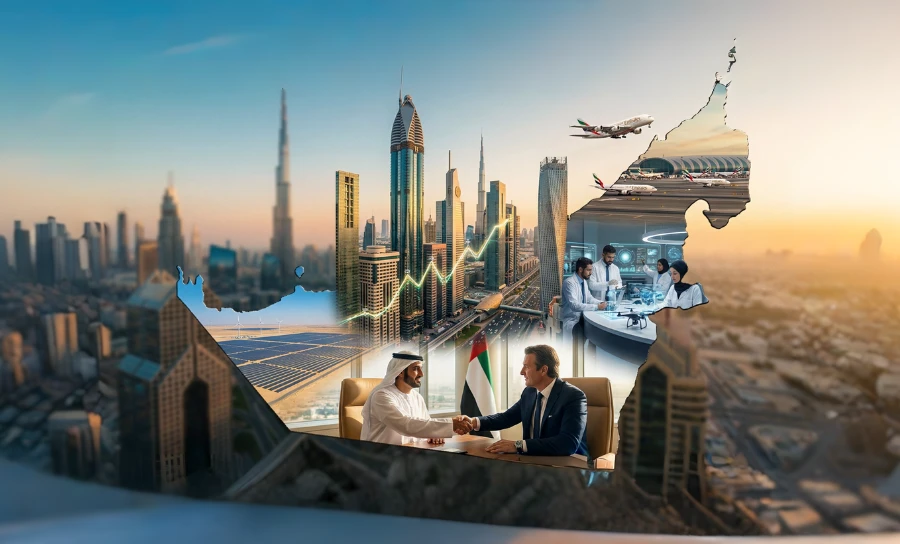
When global credit rating agency S&P Global Ratings confirmed the UAE's sovereign rating at AA/A-1+, the highest possible range for any country in the region, it sent a clear message to the world: the UAE is open for business, and it is built to last.
This rating wasn't handed out during calm and comfortable times. It came against a backdrop of regional geopolitical tension, rising global interest rates, and ongoing uncertainty in energy markets. The fact that the UAE held firm at the very top of the credit scale says everything you need to know about how far this country has come in transforming its economy.
For those of us living, working, or investing in the UAE, this is genuinely exciting news. It means lower borrowing costs for businesses, continued access to global capital markets, and an economy that is increasingly resilient to the kind of shocks that have historically rattled oil-dependent nations in the Gulf.
From Oil to Everything Else: Growth Beyond Oilrowth Beyond Oil
For much of the 20th century, the Gulf's financial health was tightly connected to one thing: the price of oil. When oil was expensive, governments ran surpluses and built cities. When it fell, the cracks appeared quickly.
The UAE made a deliberate decision decades ago to change this story. The country invested heavily in building new industries; financial services, tourism, logistics, technology, and real estate, that could generate income regardless of what was happening with oil prices. That long-term strategy is now paying off in a very visible way.
Today, non-oil sectors are not just sidelines to the energy business. They are major contributors to GDP, employment, and tax revenues. The transformation has been so successful that ratings agencies now look at the UAE through a fundamentally different lens than they do at other oil-producing nations.
Real Estate: The Most Important Part
If one sector truly captures the incredible transformation of the UAE's economy, it is real estate. What was once a relatively simple construction market has evolved into one of the most sophisticated and attractive property ecosystems anywhere in the world.
The numbers speak for themselves. Dubai's property market has seen record-breaking transaction volumes year after year. Demand for prime residential apartments, luxury villas, and commercial spaces continues to outpace supply in many areas. International buyers; from Europe, Asia, Africa, and the Americas; are choosing the UAE not just as a holiday destination but as a permanent home and a core part of their investment portfolio.
What is driving this? Several factors have combined to create the perfect storm of positive demand:
Residency reforms have changed everything. The introduction of the Golden Visa programme, long-term investor visas, and retirement visas means that international buyers can now put genuine roots down in the UAE. This is not a market of short-term speculators; increasingly, buyers are families, entrepreneurs, and retirees who plan to live here for the long term. That kind of buyer creates a stable, deep property market.
Tax advantages remain one of the UAE's most powerful magnets for global wealth. With no income tax, no capital gains tax, and no inheritance tax, the country offers investors a financial environment that is almost impossible to replicate elsewhere. When you combine this with strong rental yields; often in the range of 5% to 8% in prime areas; the case for UAE property becomes very compelling.
Geopolitical safety has taken on new meaning in recent years. As instability has grown in various parts of the world, high-net-worth individuals and family offices have actively sought locations that offer political stability, rule of law, and a secure environment for wealth preservation. The UAE, and Dubai in particular, has become the answer to that search for millions of people. Property here is not just a home or an investment; for many buyers, it is a safe harbour.
What makes UAE real estate particularly interesting from an investment perspective is how it behaves compared to other asset classes. While global stock markets can swing wildly on the back of a single news headline, and bonds have faced years of difficulty in rising interest rate environments, property in the UAE has demonstrated a remarkable ability to hold value and generate income through cycles.
Rental yields remain strong, demand from both residents and tourists keeps occupancy rates high, and infrastructure improvements continue to make UAE cities even more liveable. For investors looking for something that provides genuine diversification within their broader portfolio, UAE real estate ticks almost every box.
The sector also functions as a powerful engine for the wider economy. Construction activity creates jobs and drives demand for materials and services. New residents spend money locally on hospitality, retail, education, and healthcare. The knock-on effects ripple through almost every part of the economy, creating a virtuous cycle of growth.
Financial Services: The World's Capital Is Coming Here
Alongside real estate, the UAE has built one of the most impressive financial services ecosystems in the world. The Dubai International Financial Centre (DIFC) and Abu Dhabi Global Market (ADGM) have evolved into genuine global platforms, not just regional backwaters.
Some of the biggest names in global finance have made the UAE their regional home. Hedge funds, private equity firms, asset managers, and investment banks have all established or significantly expanded their presence here. Firms like Apollo Global Management, Brookfield Asset Management, Millennium Management, and Brevan Howard are now active players in the UAE market. This clustering effect matters, each new arrival makes the ecosystem richer, the networks deeper, and the market more liquid. It becomes self-reinforcing.
For property investors, this is particularly relevant. The growth of the financial services sector brings high-earning professionals who need quality housing, quality offices, and quality amenities. It creates sustained demand for premium real estate across Dubai and Abu Dhabi.
Trade, Logistics, and the Power of Position
Geography has always been one of the UAE's great advantages, and the country has been smart about turning location into a lasting economic asset. Sitting at the crossroads of Europe, Asia, and Africa, the UAE has invested massively in becoming the world's premier transit and logistics hub.
DP World, one of the world's largest port operators, is headquartered here. Dubai's airports handle tens of millions of passengers and enormous volumes of cargo each year. Jebel Ali remains one of the busiest ports on the planet. This infrastructure generates enormous economic activity and, importantly, creates a very stable base of international business travellers and residents who need housing, offices, and services.
What the Credit Rating Actually Tells Us
When S&P reaffirms the UAE's AA rating during a period of regional tension, they are not just saying "this country has a lot of oil money." They are saying something much more important: this economy is genuinely resilient, this government is fiscally responsible, and this country will meet its obligations even if external conditions get difficult.
For investors, that translates into confidence. It means the banks operating here are backed by a sovereign that is regarded as near risk-free. It means the currency is stable. It means the regulatory environment is predictable. And it means that the UAE will continue to attract the global capital, talent, and businesses that underpin long-term property demand.
The UAE still benefits from significant oil and gas revenues — and those revenues continue to fund sovereign wealth funds and public investment that give the country enormous financial firepower. But the story has changed. Oil is no longer the only chapter; it is just one part of a much richer, more diverse, and more sustainable economic narrative.
Final Thoughts
If you’re thinking about buying property in the UAE, whether to live in, rent out, or just to grow your money over time, things are looking very positive right now.
The country has a strong and stable economy, a high credit rating, and a well-developed financial system. The real estate market has grown a lot and is now seen as a trusted option by investors from around the world. On top of that, there are benefits like low taxes, residency options, great infrastructure, and a high level of safety. All of this makes the UAE stand out compared to many other places.
The UAE’s growth hasn’t happened overnight. It’s the result of long-term planning, smart decisions, and consistent effort. The recent credit rating confirmation just shows that the country is on the right track, and there’s still a lot of potential ahead.
Popular Blogs
Why People Choose to Buy Property in Dub
Your Guide to the UAE Golden Visa in 202

Cash vs Mortgage: Best Way to Buy in Dub

Dubai launches first home ownership plan

How Dubai’s 1% Payment Plans Work: Guide