What Happens at Property Handover in Dubai and What You Must Check
May 4, 2026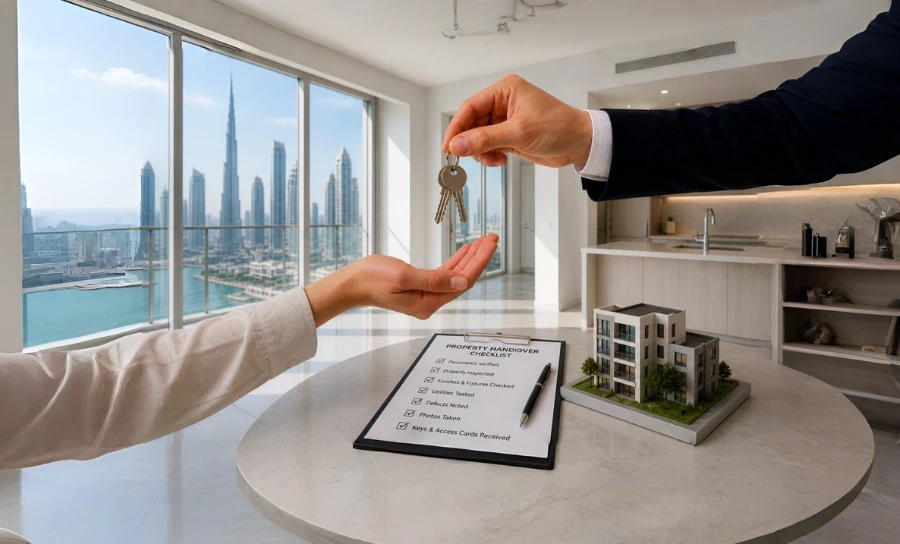
You've made the payments. The developer has sent a notice. The unit is supposedly ready. So the hard part is over, right?
Not quite. The Dubai property handover process is where a lot of buyers make costly mistakes, not because they're careless, but because they don't know what to look for. This guide walks you through everything you need to check before you accept those keys, in plain language, so you can take ownership with confidence.
What Is Property Handover in Dubai?
Property handover is the official stage where you, as the buyer, review the finished unit, settle any remaining payments, and take possession. It sounds simple, but there are three things that must all line up at the same time: the property must be physically complete, your paperwork must be in order, and your finances must be fully settled.
Miss any one of those three, and problems follow. This is especially true for off-plan buyers. In Q1 2026, off-plan properties made up 70% of all Dubai sales transactions, worth a total of AED 176.7 billion. That is a lot of handovers happening, and a lot of buyers who need to get this right.
Before You Even Enter the Unit: Prepare Your File
The Dubai property handover checklist starts before you set foot in the building. Pull together one complete file that contains:
• Your handover notice and completion certificate
• All payment receipts and the final account statement
• Your sale and purchase agreement
• Passport copy and Emirates ID
• Your Oqood registration record (for off-plan units)
• Any email correspondence with the developer or broker
• Mortgage clearance letter if applicable
Having this file with you means you can cross-check on the spot, not chase documents later.
The Property Inspection (Snagging): What to Actually Check
This is the most important step in the entire process, and the one most buyers rush. A property snagging inspection in Dubai is not a casual walkthrough. It is a structured, room-by-room technical review. Bring a printed checklist, a phone for photos, and enough time to go through everything properly. Do it during daylight hours so you can see clearly.
Walls, Ceilings and Finishes
Check paint for uneven coverage, cracking or bubbling. Look at tiling, skirting boards, joinery, and door frames. Open every wardrobe, cabinet and internal door. Test locks, hinges, and handles. Look at window glass and silicone sealing. These details are easy to miss on a rushed visit but expensive to fix if you discover them after moving in.
Electrical Systems
Test every single switch and socket. Check the breaker panel labeling. Run the air conditioning in every room and confirm it performs consistently. Test the intercom, access controls, lighting, and any alarm points. If anything is labeled incorrectly or fails to respond, note it immediately.
Plumbing and Water
Run every tap. Flush every toilet. Let showers run long enough to check drainage speed. Check under sinks for leakage or moisture. Test balcony drainage by pouring water. Water problems look small at handover and become major issues within months. Do not skip this section.
Kitchen and Appliances
Open all cabinets and drawers. Check soft-close function, countertop finish, and backsplash joints. Test all built-in appliances; hob ignition, hood suction, oven, and the power outlets. Check sink sealing and water flow.
For Villas and Townhouses: External Areas
Check boundary walls, garden taps, drainage slope, paving, roof edges and external lighting. Look for any signs of poor waterproofing. Check whether surface water moves toward or away from the structure. A villa handover in the UAE needs this extra layer of review that apartments do not.
The Snag List: How to Record Defects Properly
After your inspection, write up a snag list, a written record of every issue you found. This is not optional. A verbal conversation with the developer carries no weight. A written list does.
Structure the list room by room. For each issue, record the exact location, the exact problem, and what correction you expect. Attach photos. Email it to the developer on the same day as the inspection and ask for written confirmation. This paper trail protects you if you need to follow up or escalate later.
Mark urgent items first, anything affecting habitability, safety, or structural integrity. Once the developer clears defects, re-inspect before formally accepting the unit.
Fees to Settle Before Handover
The fee statement at handover catches many buyers off guard. Before you pay anything, ask for a full written breakdown and check it against your sale agreement. Common items include the final installment, service charge contribution, registration-related costs, and admin charges.
For each line item, confirm three things: who is collecting it, what it covers, and when it becomes due. Do not pay charges you do not understand. A rushed payment is harder to dispute later than a question raised before signing.
Key Collection and Ownership Transfer
Once defects are resolved and payments are settled, you move to the final step. At key collection, you should receive the physical keys, access cards, parking remotes, appliance manuals, warranty documents, and community rules.
This is also where you confirm the ownership transfer route. For off-plan properties especially, possession and final registry action do not always happen on the same day. Understand the next step before you leave the handover appointment.
Can You Rent Out the Property Immediately After Handover?
In most cases, yes, but taking possession is not the same as being rental-ready. Before you list the property, make sure water and cooling are active, access devices are working, all defects are either resolved or formally recorded, and you have the paperwork required for leasing. Treating rental readiness as part of the handover plan, not an afterthought, means you can start generating income sooner.
Common Mistakes Buyers Make at Handover
Knowing what goes wrong most often is just as useful as knowing what to do right:
• Rushing the inspection — a 20-minute walkthrough is not a snagging inspection. Go room by room.
• Not submitting a written snag list — verbal defect reports have no enforceable weight.
• Ignoring small defects — minor issues often reveal poor workmanship that worsens over time.
• Paying fees without reviewing them — always check the breakdown before paying.
• Skipping document checks — one missing notice or unclear statement can delay the registry step.
• Not re-inspecting after rectification — confirm that repairs were actually done correctly.
Why This Level of Care Matters in 2026
Dubai issued 3,100 building completion certificates in Q1 2026, alongside 10,700 new building permits, a 12% increase year-on-year. Construction is accelerating. Handover volumes are rising. That is good news for the market, but it also means quality control varies more across projects. Buyers who inspect carefully and follow a structured process are the ones who come out with clean possession and a property that holds its value.
The Dubai property handover process is not just a formality. It is the moment where due diligence has its most direct financial impact. Treat it with the same seriousness as the purchase decision itself.
Final Thoughts
Handover is where ownership becomes real, and where preparation pays off. Buyers who inspect every room, submit a proper snag list, review every fee, and keep their documents organized take possession with fewer problems and a stronger foundation.
If you want support through the process, whether it is reviewing the unit, understanding your paperwork, or making sure you do not miss anything critical , working with an experienced agent who knows the handover process in detail makes a meaningful difference.
Popular Blogs

Why People Choose to Buy Property in Dub

Your Guide to the UAE Golden Visa in 202

Cash vs Mortgage: Best Way to Buy in Dub

Dubai launches first home ownership plan

How Dubai’s 1% Payment Plans Work: Guide