Riyadh vs Dubai Property Investment: Which Market Offers Better Returns?
January 5, 2026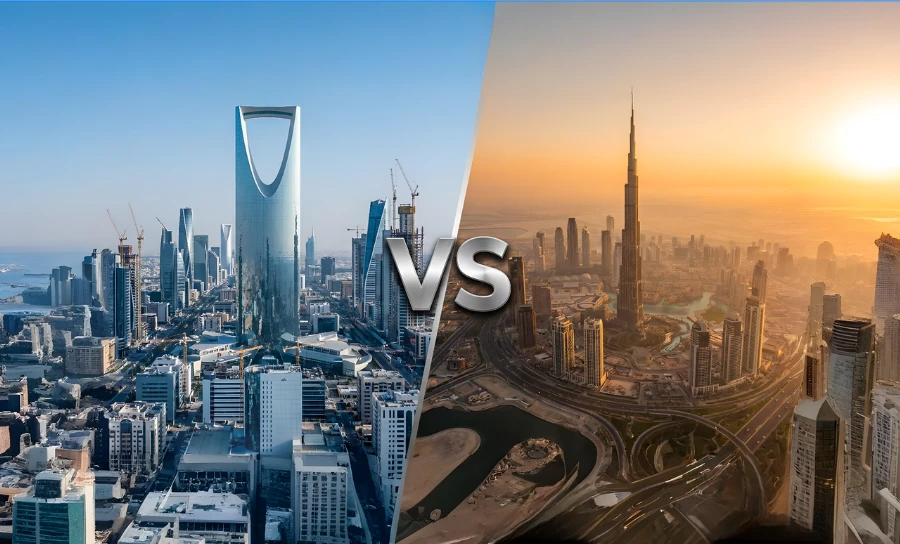
The Gulf area has evolved as a worldwide real estate hotspot, with Dubai and Riyadh in the forefront. As we approach 2025, investors worldwide are asking a fundamental question: which city provides the best property investment opportunity? With Dubai's established market performing at record levels and Riyadh's booming growth spurred by Vision 2030, the solution is not obvious. This research looks at the most recent market statistics, rental yields, capital appreciation, and investing trends to help you make an informed decision.
Market Performance and Price Trends
Dubai's Record-Breaking Momentum
Dubai's property market continues its record-breaking trajectory through 2025. The market registered around 94,000 property transactions worth AED 262.7 billion in the first half of 2025, representing a 40% year-on-year increase. Housing sales prices experienced a 15.8% annual increase, with prime locations driving exceptional demand.
Villa prices have been particularly strong, with average prices climbing above AED 5.2 million by mid-2025, marking a 32% jump year-on-year. Villas in Jumeirah Islands surged 41%, Palm Jumeirah rose 40%, while Emirates Hills and The Meadows both increased 27%. Current property prices average around AED 1,448 to AED 1,650 per square foot, sitting approximately 17.4% above the previous market peak of 2014.
Since late 2020, Dubai home values have increased by an estimated 57.9%. Dubai's freehold villas are currently worth 66% more than they were in 2014, and 175% more than they were after the outbreak. The city's population has surpassed 3.8 million, representing a 5% year-on-year rise, with GDP rising 3.2% to AED 231 billion.
Riyadh's Explosive Growth
Saudi Arabia's residential property market expanded by 5.1% year on year in Q1 2025, with Riyadh leading the way with an amazing 10.7% rise. Residential sale prices in Riyadh increased 10% year on year in the first half of 2024, while rents rose 9%.
As of June 2025, the average residential property price per square meter in Riyadh was SAR 4,971 (about USD 1,325) for flats and SAR 5,824 (approximately USD 1,553) for villas. Luxury villas in upscale neighborhoods attract much higher costs, ranging from SAR 7,500 to 10,000 per square meter.
In the first half of 2024, the Saudi real estate market experienced a 38% increase in transactions, totaling SAR 127.3 billion. Industry analysts predict ongoing strong growth, with national prices rising 6-8% in 2025 and 5-7% in 2026. Riyadh is predicted to lead with 8-10% annual growth through 2026, fueled by EXPO 2030 preparations and ongoing Vision 2030 spending.
Rental Yields: The Income Story
Dubai's Solid Returns
Dubai routinely provides rental returns ranging from 6% to 10% each year, depending on location and property type, which are much higher than established markets such as London (2-4%) and New York (3-5%). The UAE's average gross rental yield is 5.45% as of Q4 2025, with Dubai's average being exceptionally attractive at roughly 6.8% in mid-2025.
High-yielding locations include Jumeirah Village Circle (JVC) with yields ranging from 6.78% to 7.87% for studios and apartments, Business Bay studios with yields of around 7.92%, Dubai Marina studios with yields of up to 6.50%, Al Furjan studios with yields of up to 8.51%, Downtown Dubai studios with returns of more than 8%, and International City affordable apartments with yields of 9-10%.
Riyadh's Superior Yield Advantage
Riyadh's gross rental yields are roughly 9% per year, while Jeddah averages around 8%, which is much higher than Dubai's average. In Riyadh, the average gross rental yield remains strong at 8.89%, establishing the Saudi capital as the region's highest-yielding major market for property investors.
Riyadh rental properties provide respectable profits, with flats averaging 8-12% yields and villas yielding 5-8% yearly as of September 2025. The yield difference is enormous, with Riyadh's 8.89% average surpassing Dubai's 6.8%, resulting in around 30% more rental income on comparable investments.
Capital Appreciation and Growth Potential
Dubai's Proven Track Record
The Dubai Urban Master Plan 2040 predicts a population increase of 7.8 million, indicating continued housing need. The market's maturity has both advantages and disadvantages. The city provides proven liquidity, transparent transactions, and established legal frameworks.
However, given the massive delivery pipeline of 210,000 units by 2028, Fitch Ratings warns that oversupply could result in 10-15% price reductions by late 2025 or early 2026. The market estimates housing supply to expand by roughly 182,000 units between 2025 and 2026, with around 76,000 units scheduled to be constructed in 2025.
Riyadh's Vision 2030 Momentum
The Saudi Arabia Real Estate Market is estimated at USD 67.94 billion in 2025 and expected to reach USD 96.03 billion by 2030, growing at a CAGR of 7.17%. The market is projected to rise from USD 71.8 billion in 2024 to USD 130.8 billion by 2033.
Riyadh's population of 7.95 million in 2025 is set to balloon to 17 million by 2030, representing a 127% increase in just five years. This explosive population growth creates tremendous demand pressure on housing stock. Vision 2030 mega-projects include NEOM (a futuristic USD 500 billion city project), The Red Sea Project (34,000 sq. km tourism center with 50 resorts by 2030), Qiddiya Entertainment City (major entertainment hub 40 km from Riyadh), and King Salman Energy Park.
Riyadh's commercial office vacancy rate stands at just 1.3% city-wide as of Q1 2025, with Grade A buildings achieving near-full occupancy of 99.8%. This tight market indicates strong economic fundamentals and business expansion.
Market Fundamentals and Investment Structure
Dubai's Mature Ecosystem
Dubai benefits from decades of real estate development expertise and world-class infrastructure. Key benefits include no income tax on rental income, a Golden Visa program that provides 10-year residency for property investments of AED 2 million or more, a transparent legal framework with established property rights, a 4% transfer fee split between buyer and seller, and mature market infrastructure with professional property management.
Properties can be purchased freehold in designated regions, with clear title deeds and RERA regulations. There are no annual property taxes or capital gains tax on property sales. Service prices vary by community and often range from AED 7 to AED 70 per square foot.
Riyadh's Evolving Framework
Saudi Arabia declared in January 2025 that foreign investors might invest in companies that control real estate in Mecca and Medina, signaling a significant policy shift aimed at luring worldwide wealth. Riyadh is attracting both domestic and international investors, as interest rates are predicted to fall by 225 basis points by the end of 2025.
The Real Estate Transaction Tax (RETT), which was imposed in April 2025, levies a flat 5% tax on all property transactions but has had little impact on market momentum. Key considerations include a 5% Real Estate Transaction Tax, a 20% rental income tax that has a significant impact on foreign investor returns, no annual property taxes on residential real estate, service charges of approximately SAR 30-50 per square meter per year, and current mortgage rates averaging 6.86% APR for conventional loans.
Riyadh experienced a watershed moment in September 2025 when it decided to freeze annual rent increases for residential and commercial buildings in the city for five years. This provides rental stability while perhaps limiting landlord income growth in the short run. The market is experiencing serious supply shortages, with only 27,500 new units delivered against a demand of 115,000 per year.
The Verdict: Which Market Wins?
The answer depends entirely on your investment objectives, risk tolerance, and timeline.
Choose Dubai If You Prioritize:
Market Maturity and Liquidity: Dubai offers established infrastructure, transparent processes, and proven exit strategies. Properties typically sell within 2-6 months in prime locations, providing exceptional liquidity for investors who may need to exit positions.
Stable Cash Flow with Zero Tax: While yields are lower than Riyadh, Dubai's 6-7% returns come with zero income tax on rental income, greater stability, and a mature rental market with established tenant pools and professional property management companies.
Lifestyle and International Appeal: Dubai's cosmopolitan environment, world-class amenities, and established expatriate communities make it attractive for both investment and personal use. The city's infrastructure, entertainment options, and quality of life are unmatched in the region.
Diversified Portfolio Options: From affordable studios in JVC to ultra-luxury villas in Palm Jumeirah, Dubai offers extensive choice across price points and property types, allowing investors to build diversified portfolios within a single market.
Choose Riyadh If You Prioritize:
Superior Rental Yields: Riyadh's 8-12% gross yields (versus Dubai's 6-7%) translate to significantly higher cash flow, particularly for income-focused investors. This 30% yield advantage compounds substantially over time.
Higher Growth Potential: With 8-10% projected annual price appreciation versus Dubai's more moderate 5-7%, Riyadh offers greater capital gains potential driven by Vision 2030 infrastructure investments and population growth.
Ground-Floor Opportunity: Vision 2030 represents a generational wealth-building opportunity similar to Dubai's transformation over the past two decades. Early investors may benefit from structural market improvements as regulations mature.
Population Growth Driver: The projected increase from 7.95 million to 17 million by 2030 creates exceptional demand fundamentals that will support long-term price appreciation and rental demand.
Final Thought
In 2025, both Dubai and Riyadh have appealing investment opportunities, although Dubai remains the preferred destination for the majority of investors. While Riyadh has greater rental returns of 8.89% compared to Dubai's 6.8%, Dubai's significant benefits make it the better investment.
Dubai's zero tax on rental income is a game changer. Riyadh's 20% rental income tax on foreign investors implies that, despite greater gross yields, net returns frequently favour Dubai. With unrivaled market maturity, transparent laws, and proven liquidity, where properties sell in 2-6 months, Dubai provides a risk-adjusted return profile that is difficult to beat.
Most importantly, Dubai offers peace of mind. Decades of real estate growth have resulted in skilled property management, clear regulatory frameworks, and well-established tenant markets. The Golden Visa program, freehold ownership rights, and RERA protection offer assurance that emerging markets cannot match. Dubai's liquidity is unrivaled, with 94,000 transactions totaling AED 262.7 billion in the first half of 2025.
While Riyadh's Vision 2030 holds enormous promise, Dubai has already demonstrated its turnaround story. The city's 57.9% growth in property worth since 2020 reflects actual, achieved gains, not predictions. For investors looking for consistent returns, capital preservation, and hassle-free ownership, Dubai's established ecosystem provides exceptional value. Riyadh may have greater headline returns, but Dubai delivers what is truly important: certainty, liquidity, and tax-free income in a world-class market.
Popular Blogs
Why People Choose to Buy Property in Dub

Your Guide to the UAE Golden Visa in 202
Cash vs Mortgage: Best Way to Buy in Dub

Dubai launches first home ownership plan

How Dubai’s 1% Payment Plans Work: Guide