Is Dubai's Property Boom Finally Over? What the 2026 Price Drop Really Means
April 29, 2026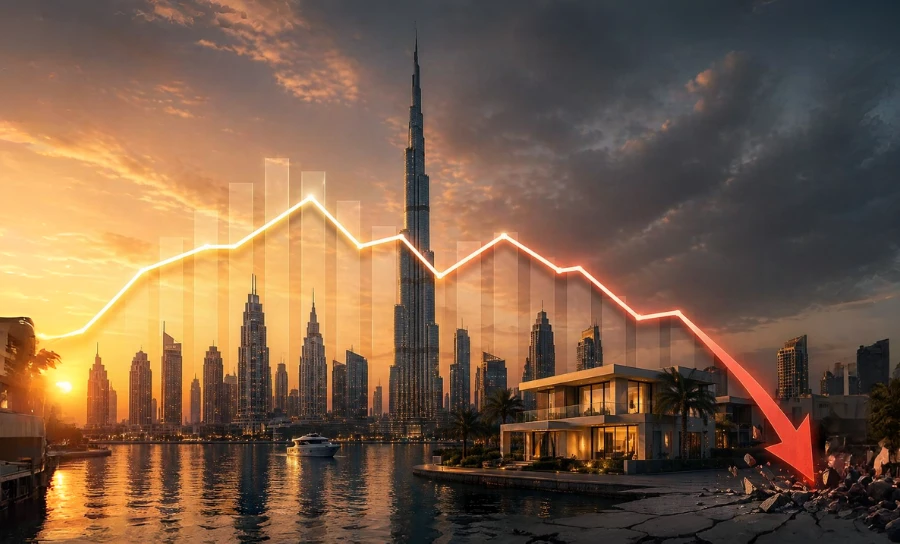
Dubai's real estate market had been doing quite well for the majority of the past five years, being largely insulated from all the factors that were adversely affecting other real estate markets in the world. Even as interest rates went up, economies stumbled, and investors were becoming more conservative, Dubai was breaking record after record. Property values rose. Transaction volumes rose even higher. The city became one of the hottest real estate markets on Earth.
This remarkable streak, however, is about to take its first real bump.
In March of 2026, Dubai experienced the first fall in property prices in six years, marking the first time in the property market that its housing prices declined month-to-month since the 2020 pandemic.
What the Numbers Actually Say
The figures provided come from ValuStrat, a property consulting and valuations company located in Dubai and which works with some of the biggest banks in the country. In March, the home price index fell 5.9 percent from the previous month. Though it looks scary on its own, in general, it can still be said that despite that drop, the level is close to where it stood half a year before; at the same time, over the same period of time in 2020, the prices increased by more than 70 percent.
In addition to that, the number of transactions significantly decreased. REIDIN, an analytical firm that receives data from the Dubai Land Department, reports that the overall volume of sales transactions fell by almost 20 percent, down from around 16 thousand to 13 thousand transactions, representing $10.1 billion or AED 37.2 billion, respectively.
Though they are significant figures, they should not be considered alone.
Why Is the Dubai Real Estate Market Slowing Down?
There are two main reasons that seem to explain the decline in the Dubai real estate prices. These are the seasonal disturbance factor and the geopolitical tension factor.
Firstly, March fell during the Eid Al-Fitr festival season and one of the wettest periods in the history of the United Arab Emirates. Betterhomes and ValuStrat have both pointed out that these are temporary disturbances that may affect real estate transactions.
Nevertheless, there is a larger underlying reason why the price of Dubai properties fell. The geopolitical tension within the Gulf Arab states started in late February 2026 has taken its toll on the UAE economy. While there were weeks of threats involving missiles and drones, the fragile peace agreement fell through after negotiations broke down.
This geopolitical tension has affected the confidence of foreign investors and affluent expatriates, which made up most of the demand for Dubai properties in recent years.
Dubai has attracted the world's top-tier buyers because of its reputation as a safe and tax-free investment site.
The Off-Plan Market Is in the Spotlight
One segment drawing particularly close attention is Dubai's off-plan market, where homes are sold before they are built. This slice of the market accounts for nearly three-quarters of all transactions in Dubai, making it a critical indicator of overall market health.
In 2009, Dubai was pushed to the edge of financial collapse largely because of a crash in the off-plan sector. That history is not lost on market watchers today. According to REIDIN, the value of off-plan sales dropped about 13% in March from the previous month.
It is noted that the Dubai off-plan market is being closely watched because it requires high-conviction bets on the city's long-term future, bets that are harder to make when regional uncertainty is elevated.
That said, major developers have not pulled back, have all pushed ahead with new project announcements, and some firms are offering buyer incentives such as reduced upfront payments to keep demand alive.
Dubai's Long-Term Structural Strengths
It would be remiss not to consider the structural changes that Dubai has undertaken in recent years, making it more resilient.
The city has vigorously promoted its golden visa initiative, which incentivizes affluent expatriates and overseas investors to establish themselves in the country. This means that the current population is more committed to the success of Dubai and its future prospects, unlike transient visitors. Expatriates make up over 85% of the UAE's population, and they are now long-term residents instead of temporary employees.
Meanwhile, property firms trading in Dubai's stock exchange have begun showing signs of recovery from the depressed state following the outbreak of hostilities in late February. The share price of Emaar Properties, the largest real estate firm in Dubai, has risen by 16% since its March low, implying that the stock market expects a recovery and not a meltdown.
Realtors in London, Monaco, and Marbella are also noting a trend in which Middle Eastern expatriates show interest in buying properties overseas as a way of diversifying, rather than evacuating the region.
Should You Worry If You Own Property in Dubai?
If you are an established property owner in Dubai, the truth of the matter is that it hasn’t happened just yet. It is only because of a one-month period where prices fell due to a combination of festive disruptions and conflict in the region that a collapse could even be considered.
If you are planning on investing in Dubai property, now may be the time to do so. Falling prices, developer incentives, and the ongoing drive to encourage international investment all point to the idea that there is still plenty of promise left within the city.
For those who are considering their options of buying property in Dubai, now is definitely a good time to think carefully about being patient.
Final Thoughts
The property market in Dubai enjoyed an unusually strong five years. The 5.9% decline in prices and reduced transaction numbers are legitimate indicators that should not be ignored, but must be considered against the background of the entire situation. Seasonal issues and correction of the overheated market all make for an impressive backdrop.
The city’s story is far from over, with golden visas, tax benefits, increasing resident population, and sustained development activity persisting as key factors in its narrative. The significance of March 2026 is clear, that Dubai’s real estate market is not invincible. Yet it will probably show itself to be quite enduring once more.
Popular Blogs
Why People Choose to Buy Property in Dub

Your Guide to the UAE Golden Visa in 202
Cash vs Mortgage: Best Way to Buy in Dub

Dubai launches first home ownership plan

How Dubai’s 1% Payment Plans Work: Guide