How War Affects Property Prices and Real Estate Markets
March 25, 2026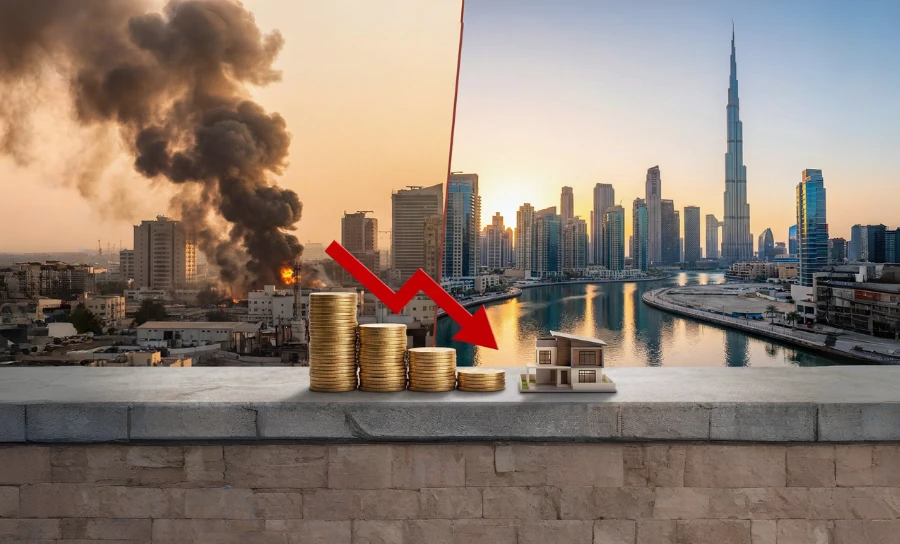
Every time geopolitical conflict erupts, investors face the same paralysing question; should I hold, sell, or buy? The headlines are alarming, the uncertainty is real, but history offers a more measured answer than the panic suggests. Whether you're tracking the stock market or monitoring property values, understanding how war and conflict move asset prices is one of the most powerful tools in an investor's arsenal.
This guide, grounded in decades of geopolitical data, breaks down exactly what happens to financial and real estate markets across three distinct phases, and what it means for your investment decisions today.
Phase 1: The Shock; Panic, Volatility & Frozen Liquidity
When geopolitical conflict starts, markets react immediately, but not necessarily rationally. The first phase is always the same: shock. Panic sets in, volatility spikes, and liquidity freezes as investors reduce risk until they understand what's happening.
According to data across dozens of geopolitical shocks throughout modern history, the immediate market response follows a consistent pattern:
• Stock markets fall sharply
• Safe-haven assets: gold, bonds, the US dollar, surge
• Oil prices spike due to supply uncertainty
• Real estate transactions pause, and volumes decline
• On average, markets drop around 5% before stabilising
Crucially, this initial reaction is driven by uncertainty, not fundamentals. Markets don't price what is happening today. They price what will happen next. Investors flee to safety not because the underlying economy has collapsed, but because they don't yet know if it will.
Phase 2: The Adjustment, Will This Affect Economic Fundamentals?
Once the initial panic fades, markets move into the second phase: adjustment. At this point, investors stop reacting emotionally and start asking one critical question, will this conflict actually damage economic fundamentals?
If the answer is no, markets stabilise quickly. Supply chains remain intact, corporate earnings projections hold, and central banks don't need to intervene dramatically. The sell-off reverses, and those who held their positions or bought during the dip are rewarded.
If the answer is yes, if the conflict escalates, disrupts trade, triggers sanctions, or threatens energy supply, markets enter a prolonged downturn. This is the scenario investors fear most, and rightly so. The geopolitical risk investing calculus changes entirely when fundamentals are threatened.
How Real Estate Behaves Differently During Conflict
Unlike equities, real estate is an illiquid asset, and that changes everything. The war impact on housing markets doesn't follow the same pattern as stock markets. Property doesn't crash overnight. It freezes first.
Historically, property markets move through three stages during periods of geopolitical uncertainty:
• Transactions pause; buyers hold off, sellers refuse to discount
• Volumes decline; fewer deals close, but prices don't collapse immediately
• Prices adjust only if the uncertainty lasts; prolonged conflict erodes sentiment and valuations over time
This is why the phrase 'illiquid assets react with delay, not panic' is such an important principle. Real estate is not the stock market, those who confuse the two often make the worst decisions during a crisis.
For markets like Dubai, a global hub that attracts capital flight during regional and global uncertainty — the dynamic is even more nuanced. In past geopolitical episodes, prime markets in politically stable jurisdictions have actually attracted inflows as investors seek safe-haven property alternatives to volatile equities.
Phase 3: The Relief Rally: When Escalation Slows Down
The third and final phase, when it arrives, is the most rewarding for patient investors. The relief rally occurs when escalation slows or a resolution emerges. Markets typically rebound as investors realise the worst-case scenario didn't materialise.
This phase has played out consistently across historical conflicts, from the Gulf War of the early 1990s to more recent episodes. The pattern is remarkably predictable:
• Equities recover, often sharply
• Capital that fled to safety returns to risk assets
• Real estate transactions resume and volumes recover
Those who sold in panic during Phase 1 often miss the relief rally entirely, locking in unnecessary losses.
What History Shows About Post-Conflict Growth
The most counter-intuitive finding from historical data is what happens after conflicts end. Three things typically follow:
• Capital returns to markets that were avoided during uncertainty
• Risk premiums, the extra return demanded for uncertainty, disappear
• Governments increase spending, stimulating economic activity
The result? Growth often accelerates after crises. Post-war reconstruction, pent-up demand, government stimulus, and returning investor confidence combine to create periods of above-average returns, particularly in real estate.
What This Means for Property Investors Today
Understanding property market uncertainty during geopolitical shocks isn't just academic; it's a practical investment advantage. Here's what it means in practice:
• Don't confuse noise with fundamentals. Initial market reactions are emotional, not analytical.
• Real estate rarely crashes overnight. Volume drops before prices do; use this as your early indicator.
• Location matters more during uncertainty. Politically stable, globally connected markets are more resilient.
• The post-conflict recovery phase has historically rewarded those who stayed invested.
Final Thoughts
War and conflict are deeply unsettling for the world and for markets. But history is consistent: most geopolitical shocks produce temporary disruption, not permanent destruction of value. Markets don't price what is happening today. They price what will happen next.
For investors in real estate, an asset class that reacts with delay, not panic, the window between the shock and the recovery is often the best buying opportunity of the cycle. The investors who understand the three phases, keep their heads when others panic, and focus on long-term fundamentals are the ones who look back and wonder why they were ever afraid.
Popular Blogs
Why People Choose to Buy Property in Dub

Your Guide to the UAE Golden Visa in 202
Cash vs Mortgage: Best Way to Buy in Dub

Dubai launches first home ownership plan

How Dubai’s 1% Payment Plans Work: Guide