How Dubai Fixes Things Before They Become Problems
February 11, 2026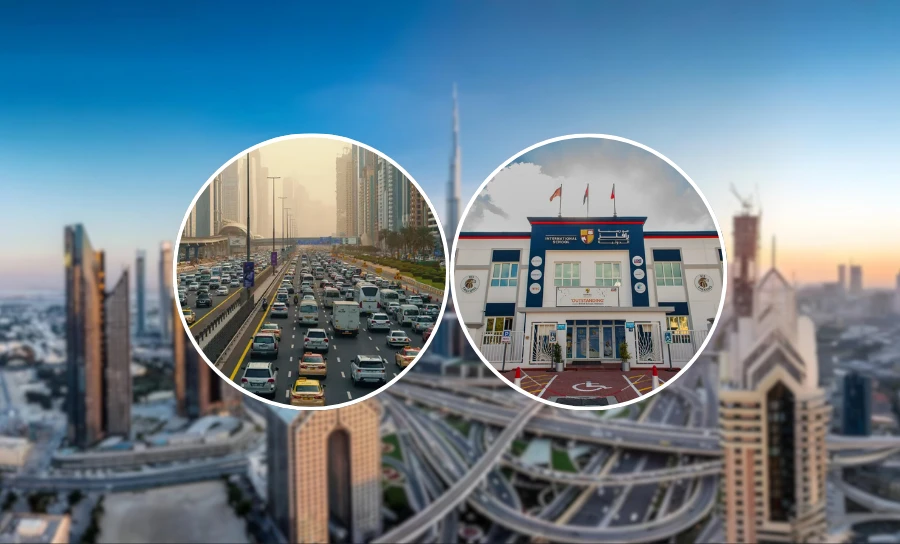
There's something remarkable about watching a city that refuses to wait for disasters. While most metropolises react to crises after they explode, Dubai has developed an unusual habit, it sees the smoke and puts out the fire before anyone else notices the heat.
This isn't about wealth or ambition. It's about a fundamentally different relationship with time. Where other cities plan in election cycles, Dubai plans in decades. Where others wait for public outcry, Dubai watches the data. The result is a place that feels perpetually one step ahead of its own growth.
Traffic: The Problem That Never Quite Arrived
Every major city has its traffic horror story. Los Angeles has its parking lots masquerading as freeways. London has its gridlock. Mumbai has its legendary jams that can trap you for hours. Dubai should have joined this club years ago.
The mathematics were perfect for disaster. A city that grew from desert outpost to global hub in a single generation, where car ownership rates rival American suburbs, should be drowning in congestion. The ingredients were all there: rapid population growth, a culture built around personal vehicles, and summer heat that makes walking more than a few blocks feel like a punishment.
Instead, Dubai started building metro lines before the traffic became unbearable. The timing seemed almost comically premature to outside observers. Why invest billions in rail infrastructure when the roads still flowed freely? The answer revealed itself gradually: by the time the population density justified metro lines, the metro was already carrying hundreds of thousands of daily passengers.
The road expansion followed similar logic. New highways appeared in areas that were still mostly sand, prepared for neighborhoods that existed only in renderings. Critics called it wasteful. Then the neighborhoods filled in, and what could have been years of construction chaos was simply ready infrastructure waiting to be used.
This isn't to say Dubai has no traffic. Rush hour exists. Congestion happens. But the catastrophic gridlock that defines so many comparable cities never materialized, because the city refused to wait until it hurt to start building solutions.
Green Spaces: Planting Trees in the Desert
The environmental math of Dubai seems impossible. Annual rainfall measures in drops rather than inches. Summer temperatures regularly push past what most humans consider survivable. Native vegetation consists of hardy shrubs designed to endure months of drought.
Yet walk through Dubai today and you'll find parks. Not token patches of grass, but substantial green infrastructure such as tree-lined streets, recreational spaces, gardens that would look at home in Mediterranean climates. This didn't happen by accident, and it didn't happen quickly.
The strategy began before the population explosion. While the city was still modest in size, planners started reserving land and building irrigation systems. They planted trees that would take years to mature, investing in shade that wouldn't pay off until future residents arrived to enjoy it.
The genius wasn't in the planting itself but in the timing. By the time Dubai's population density made green space precious, the green space already existed. The trees were already tall. The parks were already established. The alternative, trying to retrofit parks into an already-built megacity, would have been exponentially more difficult and expensive.
More recently, cooling technologies have joined the botanical approach. Bus stops with air conditioning, temperature-controlled walkways, misting systems in outdoor spaces. These appeared not in response to heat complaints but in anticipation of them, part of a continuous effort to make outdoor life viable in a climate that actively resists it.
Noisy Cars: The Silence You Didn't Notice
Motor vehicle noise is one of those problems cities don't address until it's already deafening. The pattern is familiar such as traffic increases, neighborhoods complain, debates rage about what to do, and by the time action arrives, an entire generation has grown up with constant background roar.
Dubai took a different approach. As luxury vehicle culture exploded, so did the temptation to modify exhaust systems for maximum volume. Some drivers saw loud engines as status symbols. The problem was clear before it became cacophonous.
Rather than waiting for noise pollution to become intolerable, enforcement came early and consistently. Regulations on vehicle modifications appeared alongside the trend itself. Noise monitoring systems went up before the complaints piled up. Fines for excessive exhaust noise became routine before the problem became normalized.
The result isn't perfect silence, this is still a city obsessed with powerful cars. But it's the absence of the kind of chronic noise pollution that plagues cities which waited too long to act. The problem was contained before it became cultural, before it embedded itself too deeply to extract.
School Costs: Education Before the Crisis
Education affordability follows a predictable crisis pattern in growing cities. Demand outstrips supply, costs spiral upward, families struggle, political pressure builds, and eventually some form of intervention arrives, usually after years of pain.
Dubai saw this pattern developing and moved before it fully materialized. The government didn't wait for education costs to become a political emergency. Instead, fee regulations arrived while the problem was still emerging rather than entrenched. Caps on tuition increases, oversight of school finances, requirements for fee justification, all implemented before costs became prohibitive for middle-class families.
The approach recognizes a simple truth: it's far easier to prevent a crisis than to fix one. Once education costs reach stratospheric levels, bringing them back down becomes politically and economically brutal. Intervening early, while costs are still rising but haven't yet become unsustainable, preserves access without requiring dramatic reversals.
The Pattern: Reading Tomorrow's Headlines Today
Step back from these specific examples and a larger pattern emerges. Dubai has developed an institutional muscle for anticipatory governance. It's not about having better crystal balls or smarter planners than other cities. It's about incentive structures that reward long-term thinking and penalize reactive scrambling.
This shows up in infrastructure decisions, where projects begin years before they seem necessary. It appears in regulations that address emerging issues before they calcify into intractable problems. It manifests in resource allocation that prioritizes prevention over cure.
The mechanism isn't mysterious. Data drives much of it, monitoring systems that track growth patterns, usage trends, emerging issues. But data alone doesn't create action. The critical ingredient is a governance culture willing to act on early signals rather than waiting for undeniable crises.
Why It Matters: The Compounding Returns of Acting Early
The difference between anticipatory and reactive governance compounds over time. Fix traffic before it becomes gridlock, and you save thousands of hours of productivity every day. Plant trees before you desperately need shade, and you get decades of environmental benefits. Regulate costs before they explode, and you preserve access without painful corrections.
Perhaps most importantly, early action creates psychological benefits that extend beyond the immediate problem. Residents of a city that anticipates their needs develop different expectations than residents of a city that only responds to crises. Trust builds differently. The relationship between government and governed shifts from adversarial to collaborative.
This approach isn't exportable everywhere. It requires particular conditions: long planning horizons, political stability, resources to invest before problems become acute, and governance structures insulated from purely reactive pressures. Not every city has these ingredients.
But the principle transcends context: the cheapest solution to most problems is the one implemented before the problem becomes expensive. Dubai's unusual success isn't in solving impossible challenges, it's in refusing to wait until challenges become impossible before starting to solve them.
In a world where most cities are perpetually one crisis behind, there's something refreshing about a place that stays one solution ahead.
Popular Blogs
Why People Choose to Buy Property in Dub

Your Guide to the UAE Golden Visa in 202

Cash vs Mortgage: Best Way to Buy in Dub

Dubai launches first home ownership plan

How Dubai’s 1% Payment Plans Work: Guide