Floor Area Ratio Explained for Dubai Property Buyers
July 21, 2026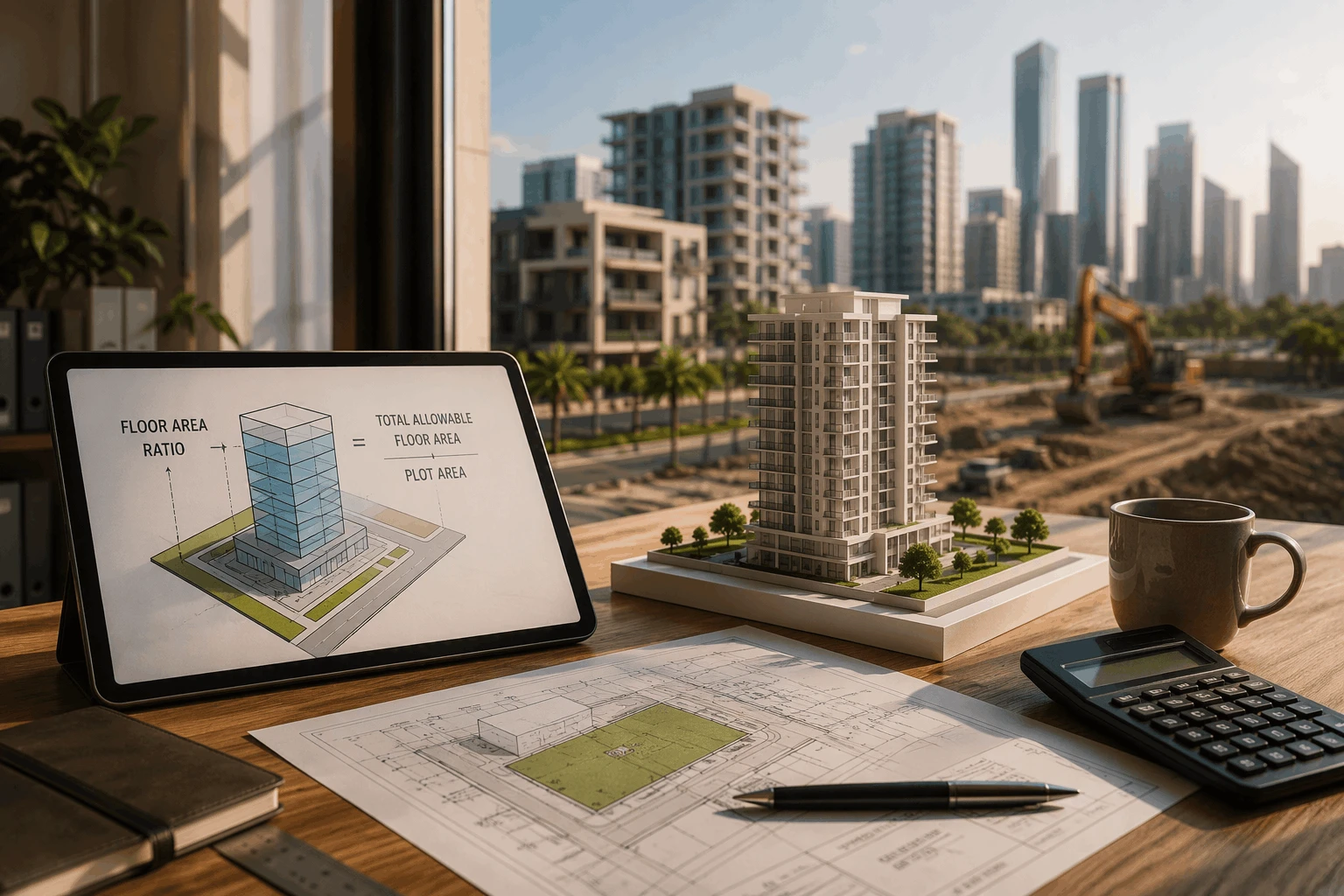
When investors look at a plot of land in Dubai, the price and location are only part of the story. One number often decides how much value that plot can truly generate: the Floor Area Ratio, commonly known as FAR. Understanding this figure early can help a buyer judge development potential, future supply, and long-term returns before committing capital.
What Floor Area Ratio Actually Means
Floor Area Ratio describes the relationship between the total floor area a building is permitted to have and the size of the plot it sits on. The formula is simple: divide the total allowable building floor area by the total plot area. So, a plot of ten thousand square feet with a FAR of five could support fifty thousand square feet of built floor space across all its levels.
This single figure tells a developer how intensively a piece of land can be used. A plot with a high FAR can support a taller, denser structure with more units or more commercial space. A plot with a low FAR is limited to a smaller footprint of usable floor area, which usually means fewer units, more open space, and a different kind of lifestyle appeal.
FAR Compared with Gross Floor Area
FAR and Gross Floor Area, or GFA, are related but different concepts, and investors sometimes confuse the two. FAR is a ratio. GFA is an actual measurement of covered floor space within a building's exterior walls, typically including residential and commercial floors, corridors, and enclosed common areas.
Developers rely on GFA to plan unit counts, construction requirements, and expected revenue. FAR is the legal ceiling that GFA must respect. Before buying into any project, it helps to clarify exactly which area figure a developer is quoting. GFA, built up area, and saleable area are not identical, and confusing them can lead to an inflated sense of what a project can deliver. A careful buyer should ask which floors count toward the ratio, whether parking and service areas are excluded, and whether the master developer applies rules stricter than the general planning authority.
Why FAR Shapes Property Value
FAR directly affects value because it sets the ceiling on how much space can legally exist on a plot. More permitted floor area generally means more units or more leasable commercial space, and that potential tends to be reflected in land prices. Dubai's property market has remained highly active, with billions of dirhams in transactions recorded in recent quarters, which only strengthens the case for buyers to understand development potential before pricing a plot.
Districts built for vertical density, such as Business Bay or areas near Downtown, typically carry higher FAR because the surrounding infrastructure, transport links, and commercial demand support taller buildings. Villa communities, such as Al Barari, are planned with lower FAR to preserve privacy, landscaping, and a quieter community feel.
A higher FAR is not automatically a better investment. Buyers should also weigh practical factors such as elevator capacity, parking ratios, view corridors, construction cost per floor, and how easily units in a dense cluster will resell. A strong investment strategy connects FAR with liveability, not just density.
How to Calculate and Apply FAR
Calculating FAR starts with confirming the actual plot size through official records rather than assumptions. From there, a buyer needs to identify the approved land use, the governing planning authority, and any additional restrictions set by a master developer. Only then can the true development potential be estimated.
It also helps to separate FAR from plot coverage. Plot coverage measures how much of the land a building occupies at ground level, while FAR accounts for total floor space across every level. A tower can have a small footprint and still carry a high FAR because its height compensates for a smaller base. A villa, by contrast, might cover a larger share of its plot while working within a much lower FAR.
A practical sequence for investors includes confirming plot dimensions, identifying the permitted use and authority, calculating the ratio itself, checking building height and setback rules, and comparing the gross floor area against what is realistically saleable. Mezzanines, podiums, service floors, and balconies can all affect how the final figure is interpreted, so these details are worth confirming directly with the relevant authority.
Typical Patterns Across Dubai
Prime high-rise clusters generally carry the highest FAR, supporting strong vertical density and commercial potential, though they also bring heavier demand on parking and services. Mixed use business districts tend to sit in a medium to high range, balancing office, retail, and residential space. Mid-rise residential communities usually offer a more moderate, balanced density. Villa communities and waterfront luxury plots tend to have the lowest FAR, prioritizing privacy, views, and exclusivity over unit count.
These patterns are useful as general guidance, but they should never replace direct confirmation from Dubai Municipality, the Dubai Development Authority, a relevant free zone authority, or the master developer overseeing a specific community.
FAR and Off Plan Investment
Off plan buyers often focus on payment plans and handover dates, sometimes overlooking the planning detail that will shape their investment long after handover. If neighbouring plots allow a high FAR, future construction can change views, increase traffic, and add competition for rental tenants. Reviewing the surrounding master plan and permitted heights before buying can reveal risks that a sales brochure will not.
Jurisdiction Matters
Dubai Municipality governs many parts of the city, while the Dubai Development Authority oversees specific zones, and master developers can layer on their own design codes and approval requirements. This means FAR rules are not uniform across the emirate. Some areas offer incentives for sustainable design or transit-oriented development that can increase permitted floor area, but these bonuses require formal approval and should never be assumed when pricing a plot.
Final Thought
Floor Area Ratio is one of the most practical tools an investor has for reading a property's real potential in Dubai. It ties together land value, density, saleable space, and long-term rental competition. Before purchasing a plot or committing to an off-plan project, confirming the applicable FAR with the relevant authority remains one of the smartest steps a buyer can take.
Popular Blogs

Why People Choose to Buy Property in Dub

Your Guide to the UAE Golden Visa in 202

Cash vs Mortgage: Best Way to Buy in Dub

Dubai launches first home ownership plan

How Dubai’s 1% Payment Plans Work: Guide