Dubai Metro Blue Line: 14 Stations, One Historic Route, and Two World Records
May 12, 2026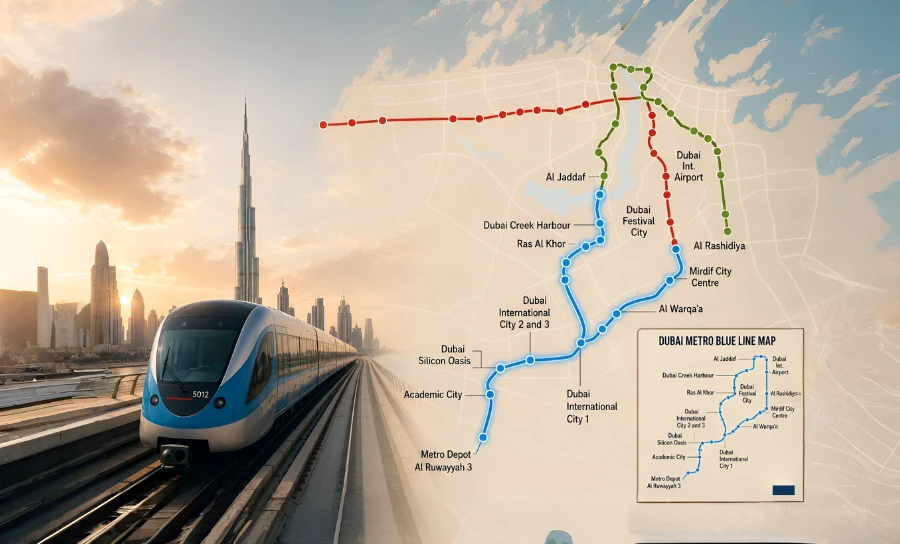
Dubai just gave us a peek into the future of its Metro network, and it looks incredible. Sheikh Mohammed bin Rashid Al Maktoum recently unveiled the design concepts for the new Blue Line stations while officially launching the main tunnelling works for the project. With a budget of Dh20.5 billion and a completion target tied to Dubai's growing ambitions, the Blue Line is one of the most exciting infrastructure projects the city has seen in years.
Let's break it all down in simple terms, what the Blue Line is, where it goes, and what makes it genuinely special.
What Is the Dubai Metro Blue Line?
The Blue Line is a brand-new metro route stretching 30 kilometers across Dubai. It will have 14 stations in total and is designed to connect residential areas, universities, and major development zones. By 2040, it is expected to serve a population of around one million people.
The 14 stations break down as follows:
• 3 interchange stations: where passengers can switch to other metro lines
• 7 elevated stations: built above ground level
• 4 underground stations: built below ground
Where Does the Blue Line Go?
The Blue Line is split into two routes that converge at International City 1, the central interchange hub. Together, they form a connected network serving the eastern and inland parts of Dubai.
Route 1: Creek Interchange Station to Academic City (21km, 10 Stations)
This is the longer stretch, running 21 kilometers and connecting 10 stations. It will also make history as the first Dubai Metro route to cross over Dubai Creek.
Stations along this route:
• Creek Interchange Station: connects to the Green Line, located in Al Jaddaf
• Dubai Festival City
• Dubai Creek Harbour: home to the world's highest metro station
• Ras Al Khor
• International City 1: major underground interchange hub
• International City 2
• International City 3
• Dubai Silicon Oasis
• Academic City
Route 2: Centrepoint Interchange Station to International City 1 (9km, 4 Stations)
This shorter branch covers 9 kilometers, linking four stations before merging into the main route at International City 1.
Stations along this route:
• Centrepoint Interchange Station: connects to the Red Line, located in Al Rashidiya
• Mirdif
• Al Warqa
• International City 1 Interchange Station: junction with Route 1
Two Record-Breaking Stations
Of the 14 stations, two have been singled out for setting records, not just in Dubai but on a global stage.
1. Dubai International City 1, Largest Underground Interchange in the Dubai Metro
This station is enormous in scale and ambition. It will serve as the nerve centre where both Blue Line routes meet, making it one of the most important stations in the entire network.
• Size: Over 44,000 square metres
• Daily capacity: Around 350,000 riders per day
• Role: Central hub where both Blue Line routes connect
2. Emaar Properties Station at Dubai Creek Harbor, World's Highest Metro Station
Standing at 74 meters, this station will be the world's highest metro station. It was designed by Skidmore, Owings & Merrill, the American architectural firm also behind the Burj Khalifa, the Sears Tower in Chicago, and the Olympic Tower in New York.
The design is inspired by the concept of a gateway, with open spaces, soaring walls, natural textures, and warm, earthy tones intended to create a sense of luxury and belonging.
• Height: 74 meters above ground
• Size: About 11,000 square meters
• Daily capacity: Around 160,000 riders per day
• Expected daily ridership by 2040: Over 70,000 passengers
• Who it serves: Residents of Dubai Creek Harbor (estimated population of 40,000) and visitors
Why the Blue Line Matters for Dubai
The Blue Line is more than just a new metro route. It's a major step in Dubai's long-term transport and urban planning strategy. Here's why it matters:
• Connects underserved areas: Neighbourhoods like International City, Mirdif, Al Warqa, and Silicon Oasis will finally have direct metro access.
• Supports academic zones: With a stop at Academic City, students and staff across multiple universities will benefit hugely.
• Opens up Dubai Creek Harbour: One of Dubai's most ambitious new developments gets its own world-record metro station.
• Bridges the Red and Green Lines: By connecting at Centrepoint and Creek Interchange, the Blue Line creates a more unified and efficient metro network.
• Built for the future: Designed to serve a population of one million by 2040, the route grows with the city.
Final Thoughts
The Dubai Metro Blue Line is shaping up to be one of the most ambitious and beautifully designed transit projects in the region. From the world's highest metro station to an underground interchange the size of a small neighbourhood, every element has been thought through carefully, for both function and experience.
Whether you live in Mirdif, work in Silicon Oasis, study in Academic City, or visit Dubai Creek Harbour, the Blue Line is going to change the way you move around this city. And if the designs are anything to go by, the journey itself might just be worth it.
Popular Blogs
Why People Choose to Buy Property in Dub
Your Guide to the UAE Golden Visa in 202

Cash vs Mortgage: Best Way to Buy in Dub

Dubai launches first home ownership plan

How Dubai’s 1% Payment Plans Work: Guide