Best Free Zone in Dubai by Founder Type
September 9, 2026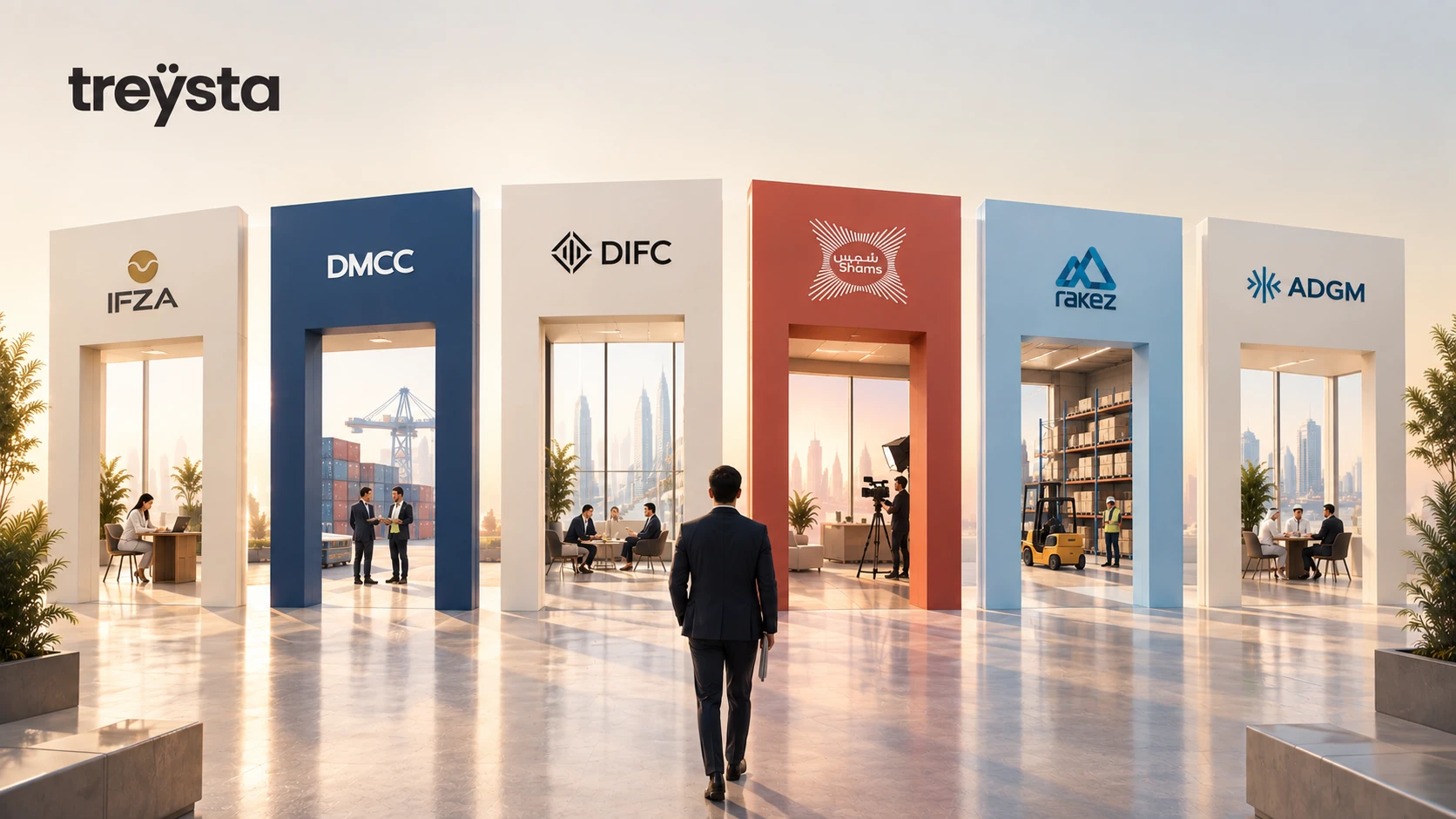
Search "best free zone in Dubai" and you get the same result every time: a listicle ranking IFZA, DMCC, DIFC, ADGM, SHAMS and RAKEZ by price, with the cheapest option crowned the winner. That approach sounds helpful, but it quietly ignores the one thing that matters. A solo consultant, a commodities trader, a funded fintech founder and a family office manager are not solving the same problem, so they should not be shopping off the same list.
Before writing this up, we checked the published pricing for each zone against official sources and current 2026 guides. The numbers below are accurate and current as of this year. Here is what each zone suits.
The Solo Operator: IFZA
If you are a consultant, freelancer or single founder running a services business with no team and no need for physical office space, IFZA remains one of the fastest and cheapest ways into the UAE market. A zero-visa package starts at roughly AED 12,900 a year and includes a flexi desk. Add one residency visa and a realistic first year total lands around AED 21,000 to 22,000 once you factor in the establishment card and visa processing. IFZA will not win you prestige points in a pitch deck, but for someone who just needs a compliant license and a bank account, it is hard to beat on speed and cost.
The Trader: DMCC
Commodities, general trading, and anything where banking trust matters more than shaving off a few thousand dirhams points toward DMCC. The Basic Biz Package runs AED 35,484 a year with a co-working allocation, and the Jump Start Package at AED 43,780 adds a flexi desk and one included residency visa (with room to add more). What the polished marketing rarely mentions is that DMCC does not issue a purely virtual license, and there is no warehouse option on site if you are moving physical goods. You are paying for the JLT address and the institutional credibility that comes with it, not for flexibility.
The Funded Tech Founder: DIFC
Fintech, AI, and Web3 founders often assume DIFC is priced for banks and law firms, and standard DIFC licensing can indeed run AED 65,000 to well over AED 250,000 a year. But DIFC's Innovation License changes that math entirely. It is subsidized to roughly AED 5,500 to 6,000 a year for eligible tech companies, and once you add a co-working seat in the Innovation Hub, an all-in figure of around AED 16,000 to 18,500 a year is realistic, close to a 90 percent discount off standard rates. The catch is a visa cap tied to your workspace package, and eligibility is reviewed once you grow past roughly ten employees, at which point you move to standard commercial rates.
The Fund Manager: ADGM
Family offices, holding structures and investment vehicles need a legal system that global investors already trust, and that is where ADGM's independent English common law courts earn their keep. A non-regulated holding or SPV structure typically costs around AED 15,000 to 25,000 a year. If your activity requires FSRA regulation, such as asset management or fund administration, budget separately for that: registration fees are charged in US dollars and regulatory supervision fees for categories like Cat 3C or Cat 4 firms commonly fall in the USD 15,000 to 30,000 range on top of setup. ADGM is not the cheapest path, and it is not meant to be. It is the path that makes institutional investors comfortable.
The Content Creator: SHAMS
Media businesses, production houses, and influencer led companies rarely need prestige. They need speed and a low cost of entry, and Sharjah Media City (SHAMS) delivers both. A zero-visa license starts at AED 5,750 a year, licenses can be issued in one to three days, and the zone allows up to fifty visas tied to the license itself rather than to leased square footage, which is unusually generous. The trade-off is substance: SHAMS' zero corporate tax rate applies at the emirate level, and qualifying for the federal 0 percent rate on qualifying income still requires meeting the UAE's separate economic substance criteria, something a lean virtual setup can struggle to demonstrate.
The Ecommerce and Inventory Trader: RAKEZ
Anyone holding real inventory, running light manufacturing, or shipping physical product needs space, not just a trading address, and that is RAKEZ's whole reason for existing. A warehouse unit in RAKEZ's industrial zone runs roughly AED 25,000 to 40,000 a year, compared with AED 60,000 to 120,000 for equivalent space in Dubai zones like JAFZA or DSO. The compromise is location: RAKEZ sits about 45 to 60 minutes north of Dubai, which matters if your team or clients need to be there regularly, though it sits directly beside Saqr Port for anyone shipping by sea.
So Which Free Zone Is Actually Best?
None of them, universally. The right UAE free zone comparison starts with your business activity, not a price table: how many visas you actually need, whether you require physical space, how important banking credibility is to your model, and whether federal tax qualification is something you need to plan around from day one. A generic "best free zone in Dubai" ranking cannot answer that, because it was never built to.
If you are still weighing your options, that is exactly the kind of decision worth getting right the first time rather than fixing later. We help founders in Dubai, Abu Dhabi, Sharjah, and Ras Al Khaimah match their business model to the right authority, structure the licensing and visa package around actual headcount plans and avoid the hidden costs that only show up after the contract is signed. Whether you are setting up as a solo consultant, a funded startup, a trading company or a fund manager, our team can walk you through the real numbers for your specific activity and get you licensed without the guesswork. Reach out and tell us what you are building, we will tell you where it belongs.
Popular Blogs
Why People Choose to Buy Property in Dub
Your Guide to the UAE Golden Visa in 202
Cash vs Mortgage: Best Way to Buy in Dub

Dubai launches first home ownership plan

How Dubai’s 1% Payment Plans Work: Guide