8 Dubai Developers Behind a $100B+ Land Empire
August 4, 2026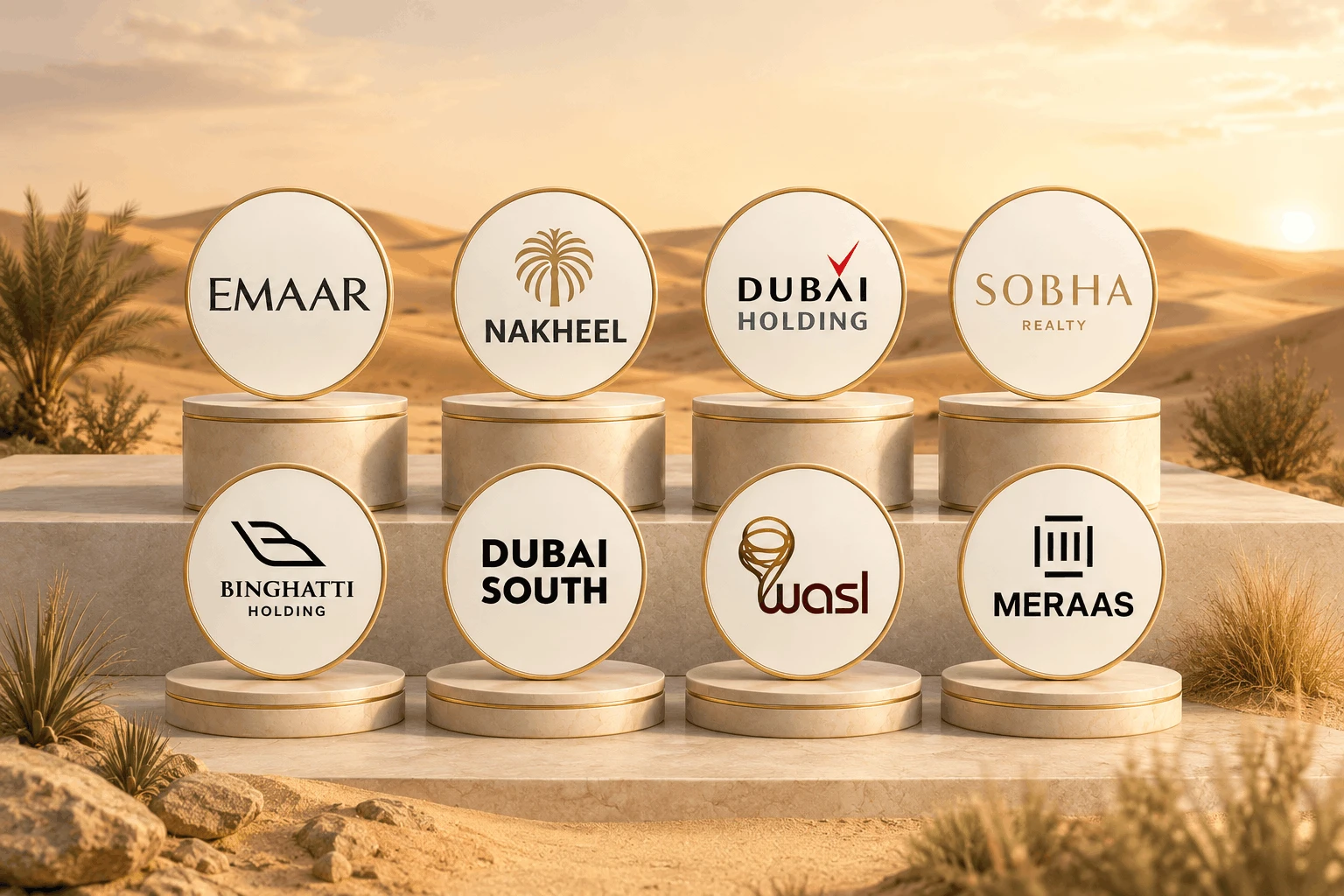
Dubai's skyline gets all the attention, but the real story is underground, in the land registries. A small circle of developers, some government owned, some private, together control land banks and pipeline projects worth well over $100 billion. None of it is finished. Almost none of it delivers before 2027, and much of it stretches into 2029 and beyond. This is not a market chasing next year's buyer. It is government and private capital both land banking for the 2030s.
Here is what each of the eight major players is sitting on right now, and why the distinction between launch year and delivery year matters more than ever if you are trying to time an entry.
Emaar Properties: Still Buying, Even While Shrinking
Emaar holds a land bank of 618 million square feet across its global operations, with about 344 million square feet in the UAE. That UAE figure has fallen by around a quarter since its 2023 peak, not because Emaar is retreating, but because the developer has shifted from aggressive land acquisition toward building out what it already owns. Deliveries are set to accelerate sharply through 2026 to 2029.
That does not mean Emaar has stopped growing. In 2025 it added a Dh2.9 billion plot at Ras Al Khor, and in June 2026 it announced a new Dh200 billion megaproject spanning more than 4.5 million square metres, designed to house 150,000 residents with views of the Burj Khalifa, Burj Al Arab and Palm Jumeirah. Emaar closed 2025 with record property sales of Dh80.4 billion.
Nakheel: Two Mega Reserves at Once
Nakheel is running parallel megaprojects. Palm Jebel Ali spans 13.4 square kilometres and is planned to be twice the size of Palm Jumeirah, with seven islands, sixteen fronds and more than ninety kilometres of new beachfront. In 2026 alone, Nakheel awarded Dh3.5 billion in construction contracts for 544 villas there, with completion targeted for late 2028. Total sales at Palm Jebel Ali have already passed Dh37 billion since relaunch. Dubai Islands, the second reserve, covers about seventeen square kilometres and has generated billions in sales of its own over recent reporting periods.
Dubai Holding: The Reach Keeps Compounding
Dubai Holding has been busy on two fronts. It expanded its joint venture with Aldar by more than Dh38 billion, adding land for almost 14,000 homes across a family focused community opposite Nad Al Sheba and a luxury waterfront plot on Palm Jebel Ali. Then, in May 2026, Dubai Holding acquired a 22.27 percent stake in Emaar Properties from the Investment Corporation of Dubai for about Dh23.9 billion, lifting its total holding to 29.73 percent and making it Emaar's largest shareholder. Between the land bank it already controls through Nakheel and Meydan, and its growing equity position inside Emaar itself, Dubai Holding's footprint now touches every major project on this list.
Sobha Realty: Its Biggest Bet in 50 Years
Mark its 50th anniversary, Sobha Realty launched Sobha Sanctuary in January 2026, a Dh50 billion, 37.5 million square foot development in DubaiLand, its largest single project to date. The plan calls for around 20,000 homes, split between 18,000 apartments and 2,000 villas, along with a hospital and two schools. First handovers are not expected before the third quarter of 2029. Sobha's wider UAE portfolio already spans more than a dozen master developments and tens of thousands of units.
Binghatti Holding: From Towers to Communities
Binghatti built its name on single branded towers in Business Bay and Downtown Dubai, often in partnership with names like Bugatti and Mercedes Benz. In 2025 it made its first move into full master planning, acquiring more than 8 million square feet in Nad Al Sheba 1 for a self-financed Dh25 billion community, its first ever masterplan. The shift signals that even Dubai's fastest moving vertical developers are now thinking in decades, not towers.
Dubai South: A City Built Around an Airport
Dubai South spans 145 square kilometres around Al Maktoum International Airport, structured as zones for aviation, logistics, exhibitions, golf, residential and business. In May 2026 it signed a Dh62 billion joint venture with Majid Al Futtaim to build a 22 million square foot mixed use district anchored by a major mall. Dubai South closed 2025 having welcomed hundreds of new companies with strong tenant retention, reinforcing its role as the emirate's next major growth corridor as the new airport scales up.
Wasl Properties: A Third Golf Course and a Rail Station
Wasl's Jumeirah Golf Estates is entering what the developer calls its next chapter, a 4.68 million square metre expansion planned to add 12,345 new homes for more than 51,700 future residents. The plan includes a third golf course, a future Etihad Rail station and two new metro links, tying one of Dubai's established golf communities directly into the emirate's expanding transit backbone.
Meraas: Not Really a competitor
Meraas is developing an 18 million square foot expansion of its d3 waterfront district aimed at housing 60,000 residents, alongside Dh2.4 billion in new villa contracts in DubaiLand this year. But Meraas shares the same parent company as Nakheel, both now sit under Dubai Holding, so it is less a rival land banker than another arm of the same balance sheet.
The Real Takeaway
Dubai is not running out of land. It is running out of land held by anyone outside this list. Government entities and private developers are land banking in parallel, not competing for the same next launch but staking claims on the 2030s. Supply keeps expanding even as some analysts question the market's pace. For anyone trying to time an entry into Dubai real estate, the lesson from all eight of these portfolios is the same: treat the launch year and the delivery year as two completely different decisions, because for most of what is described above, the wait runs well past 2027.
Popular Blogs
Why People Choose to Buy Property in Dub

Your Guide to the UAE Golden Visa in 202
Cash vs Mortgage: Best Way to Buy in Dub

Dubai launches first home ownership plan

How Dubai’s 1% Payment Plans Work: Guide